ASEAN: What It Is, Its Current Trajectory, and Future Challenges
ASEAN's Trillion-Dollar Bet: More Than Just Wires and Wishful Thinking
The numbers coming out of Southeast Asia are, frankly, staggering. We're talking about an economy projected to hit $10 trillion by 2040, a population nearing 780 million, and energy demand set to double by 2050. The International Energy Agency (IEA) reports that energy consumption in the region spiked at twice the global average rate in 2024. This isn't just about keeping the lights on; it's about powering a massive industrial expansion, with data centers being a prime example of the energy-intensive future these asean countries are chasing.
Now, for the good news, at least on paper: ASEAN is sitting on a renewable energy goldmine. We're talking 20 terawatts of potential supply from solar and wind—that's roughly 55 times their present generation capacity, for those keeping score. And this isn't just abundant energy; it’s cheap energy. You’d think this would be a no-brainer, a slam-dunk investment. Yet, the reality is far more complex, a tangled knot of finance, politics, and sheer logistical headache. The current trajectory sees demand far outstripping new renewable supply, forcing these nations to lean on fossil fuel imports, exposing them to volatile prices and, naturally, higher emissions. It’s a classic market inefficiency, staring everyone right in the face.
The Grand Grid Vision: A High-Stakes Calculation
The solution, as articulated at last year's COP29 and reaffirmed in recent asean summit discussions, is a connected ASEAN Power Grid (APG). The vision is to double interconnections, boosting capacity from 7.2 gigawatts in 2022 to a projected 33.5 GW in just fifteen years. This isn't simply linking up a few national grids; it's about building a resilient, integrated system capable of transmitting power over long distances, managing the inherent intermittency of renewables with industrial-scale storage, and integrating new digital technologies to prevent outages. The estimated price tag? A cool $750 billion.
And this is the part of the plan where I raise an eyebrow. The recent announcement of a new financing initiative from the Asian Development Bank (ADB) and the World Bank, ahead of an enhanced memorandum of understanding (MoU) for the grid, sounds promising on the surface. The ADB has committed up to $10 billion over the next decade, with the World Bank chipping in an initial $2.5 billion. They're also talking grants, guarantees, and political risk insurance to lure private capital. But let's do some quick back-of-the-envelope math: $12.5 billion against a $750 billion project. That leaves a rather substantial $737.5 billion gap. Even with the promise of private capital and concessions, that's a canyon, not a gap.
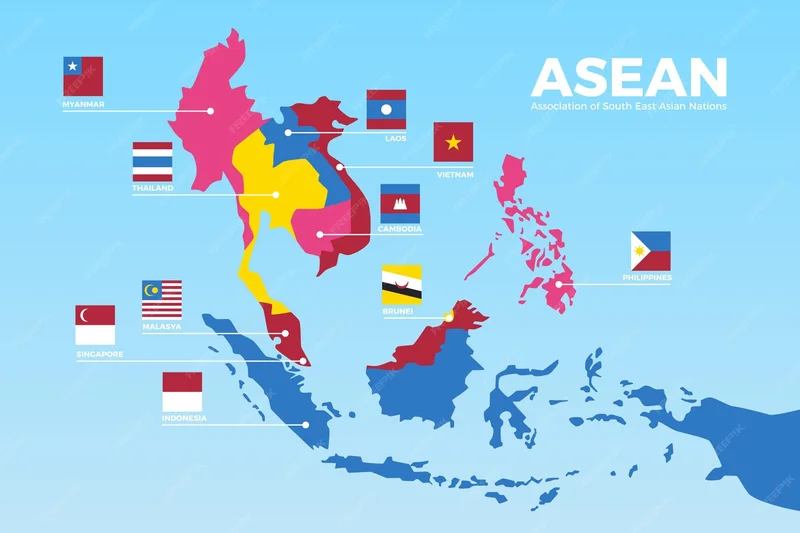
Why hasn't this grid been built already, despite being on the drawing board since the 1990s? The official line points to technical hurdles: different voltages, varying sophistication of national grids, distinct operating standards, and regulatory frameworks. All valid points, no doubt. But I'd argue the bigger elephant in the room has always been politics. Countries have historically prioritized domestic industrial development, often at the expense of regional integration. It’s a classic "tragedy of the commons" scenario, where individual national interests often trump the collective good, even when the collective good offers exponential returns.
Executives in the region have been too busy putting out other fires. The latest EY-Parthenon Global CEO Outlook survey shows Asia-Pacific CEOs are more concerned about geopolitics, macroeconomics, and trade than their counterparts in Europe or the Americas. It's a valid concern, particularly when you consider the ongoing complexities like the Philippines preparing to manage the Myanmar crisis during its asean 2026 chairmanship, alongside the perpetually stalled South China Sea Code of Conduct (COC) discussions. These aren't minor distractions; they are fundamental challenges to regional consensus, which is the bedrock for any project as ambitious as the APG. How do you get ten sovereign nations, grappling with internal divisions and external pressures, to agree on a unified energy backbone? It's like trying to conduct a symphony when half the orchestra is arguing about which piece to play, and the other half is worried about a potential brawl breaking out in the audience.
Even the recent, positive development of Timor-Leste joining ASEAN and immediately depositing its Instrument of Accession to the Southeast Asia Nuclear Weapon-Free Zone (SEANWFZ) Treaty, while symbolically powerful for reasserting neutrality, is a single note in a much larger, discordant geopolitical symphony. It speaks to a desire for regional cohesion, but it doesn't magically resolve the financial or political inertia holding back the grid. Timor-Leste steps up as ASEAN’s new neutrality anchor
The potential returns are clear: cheaper, more reliable electricity, enhanced energy security, lower emissions, and even improved climate-resilient food security down the line. We're talking about a positive feedback loop that could redefine the region's economic and environmental future. But the pathway from grand vision to ground reality is paved with far more than good intentions. It demands an unprecedented level of sustained financial commitment and political will. And this is the part where I have to wonder: are the current commitments truly sufficient, or are we witnessing another instance of ambition outstripping execution capabilities? My analysis suggests that while the blueprint is sound, the concrete pouring is still largely theoretical.
The Grid's Gambit: High Stakes, Higher Hurdles
The ASEAN Power Grid isn't just an infrastructure project; it's a monumental test of regional solidarity and financial engineering. The numbers don't lie about the potential, but they also highlight the chasm between current commitments and the actual capital required. The geopolitical currents, exemplified by asean news today covering the Myanmar crisis or the South China Sea disputes, create a high-friction environment for consensus. While the long-term benefits are immense, the short-term hurdles—technical complexities, diverse regulatory landscapes, and a colossal financing gap—remain formidable. It's a bet on regional cooperation, and given the track record, it's one with a lot of moving parts and even more variables.
Related Articles

Fifth Third Swallows Comerica for $10.9B: Why It's Happening and Why You Should Care
So, another Monday, another multi-billion dollar deal that promises to "create value" and "drive syn...

Analyzing 2025's Investment Landscape: What the Data Reveals About Top Asset Classes vs. Low-Risk Alternatives
There's a quiet, pervasive myth circulating among the baby boomer generation as they navigate retire...

GMA's Deals and Steals: A Surprising Glimpse into the Future of Retail
I want you to look past the popcorn tins and the splatter guards for a moment. On October 11th, a se...

American Battery's Breakthrough: Why It's Surging and What It Means for the Future of Energy
The Quiet Roar of the Energy Transition Just Became Deafening When I saw the news flash across my sc...

Adrena: What It Is, and Why It Represents a Paradigm Shift
I spend my days looking at data, searching for the patterns that signal our future. Usually, that me...

Plug Stock's Big Jump: What's Actually Happening and Why You Shouldn't Buy the Hype
So, Plug Power is back. Just when you thought the stock was destined to become a footnote in the ann...